Blog

  • How Taqseem Builds Brands from Zero to Scale 

    How Taqseem Builds Brands from Zero to Scale 

    Most businesses do not need another agency that only makes ads, only builds a website, or only uploads products to marketplaces. They need a partner that understands the full retail and ecommerce journey: market research, product range, sourcing, branding, ecommerce, marketplaces, fulfilment, marketing, reporting, and AI automation. 

    Taqseem was built around this idea: one integrated ecosystem for retail and ecommerce brands that want to launch, manage, and scale in the UAE, GCC, and beyond. 

    Stage 1: Market research and opportunity mapping 

    Taqseem starts by understanding the market before building the brand. This includes customer segments, competitor analysis, marketplace gaps, search demand, pricing benchmarks, retail shelf analysis, product trends, and operational realities. The goal is to find an opportunity that can become a business, not only a creative idea. 

    Research also helps define the right sales channels: DTC website, Amazon, Noon, retail, wholesale, social commerce, or a hybrid model. 

    Stage 2: Product range and sourcing strategy 

    A brand needs the right product architecture. Taqseem helps define hero SKUs, supporting SKUs, bundles, pricing tiers, packaging needs, supplier requirements, MOQ planning, and future expansion. Product strategy is connected to margin, marketing, fulfilment, and customer needs from the beginning. 

    Stage 3: Brand positioning and identity direction 

    Once the opportunity and product range are clear, Taqseem builds the brand direction: audience, promise, differentiation, tone of voice, visual identity, packaging direction, content style, and launch messaging. The goal is to make the brand easy to understand and hard to confuse with competitors. 

    Stage 4: Ecommerce and digital infrastructure 

    Taqseem helps build the ecommerce foundation: website structure, product pages, payment flow, delivery setup, analytics, SEO structure, CRM flows, WhatsApp integration, tracking, and conversion optimization. The website is treated as a commercial engine, not only a design project. 

    Stage 5: Marketplace launch and management 

    Marketplace growth requires catalogue quality, content, pricing, stock planning, advertising, promotions, reviews, and account health. Taqseem helps brands launch and manage platforms such as Amazon and Noon with a structured operating rhythm. 

    Stage 6: Retail and offline activation 

    For brands that need physical presence, Taqseem can support retail strategy, store or pop-up planning, merchandising, staff training, QR journeys, retail-to-online loops, and local activation. The goal is to connect offline trust with online retention. 

    Stage 7: Performance marketing and content growth 

    Growth depends on the right message, audience, creative, offer, landing page, and measurement. Taqseem connects content, paid media, marketplace ads, SEO, CRM, and reporting so the brand can improve weekly rather than guess. 

    Stage 8: AI automation and operating systems 

    As brands grow, operations become complex. Taqseem uses AI automation to support reporting, customer service workflows, catalogue content, trend monitoring, campaign summaries, CRM flows, and operational alerts. This helps reduce manual work and improve decision speed. 

    Why the integrated model works 

    A brand fails when its parts are disconnected: beautiful branding but weak pricing, strong ads but poor product pages, marketplace sales but no retention, retail traffic but no customer data, or high revenue but weak margins. Taqseem connects the full system so each part supports growth. 

    Final takeaway 

    Taqseem builds brands from zero to scale by combining strategy and execution: research, product, brand, ecommerce, marketplaces, retail, marketing, operations, and AI automation. The objective is not just to launch a brand. The objective is to build a commercial ecosystem that can grow. 

    FAQs 

    What does Taqseem do? 

    Taqseem supports retail and ecommerce brands across market research, product strategy, branding, ecommerce, marketplaces, marketing, operations, and AI automation. 

    Can Taqseem launch a brand from zero? 

    Yes. Taqseem can help from concept and research to product range, sourcing, branding, website, marketplaces, marketing, and scaling. 

    Does Taqseem work with existing brands? 

    Yes. Taqseem can also audit and improve existing brands across ecommerce, marketplaces, retail operations, marketing, and automation. 
  • Why Most Ecommerce Brands Fail in the UAE 

    Why Most Ecommerce Brands Fail in the UAE 

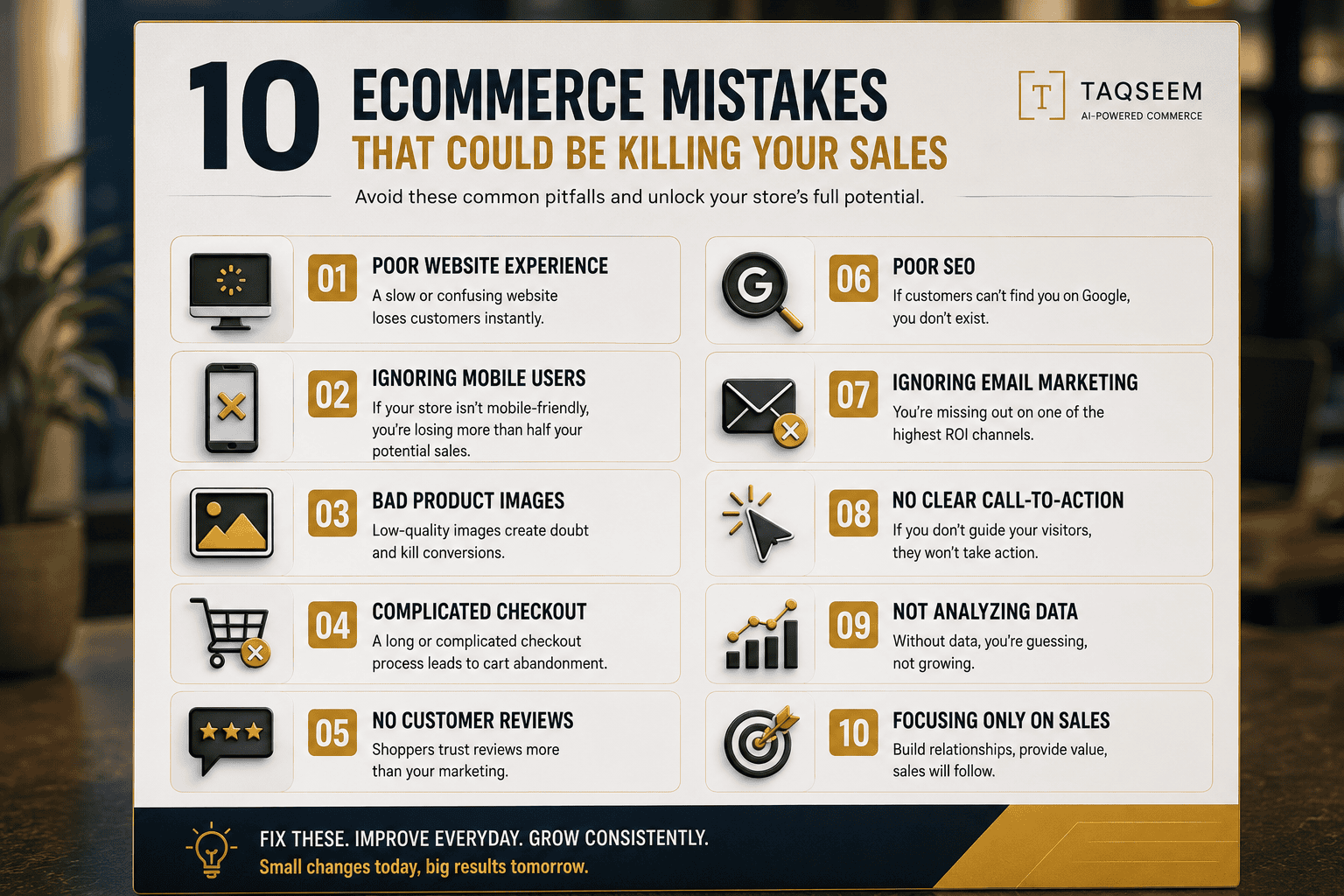
    The UAE is a strong ecommerce market, but that does not make ecommerce easy. Many brands launch with excitement, spend on ads, get early orders, and then struggle with low repeat purchase, poor margins, operational delays, high returns, or inconsistent marketplace performance. The failure usually does not come from one mistake. It comes from a weak commercial system. 

    This guide explains the most common reasons ecommerce brands fail in the UAE and what to fix before scaling. 

    Reason 1: Weak positioning 

    If customers cannot understand why the brand exists, they will compare only on price. Many ecommerce brands use generic claims such as premium quality, best price, or fast delivery. These are not enough. A strong brand needs a clear audience, clear problem, clear benefit, and clear difference. 

    Positioning should be visible across website, product pages, marketplace listings, ads, packaging, and social content. 

    Reason 2: Poor unit economics 

    Revenue does not equal profit. Ecommerce brands fail when they do not calculate landed cost, packaging, storage, platform fees, payment fees, fulfilment, returns, discounts, ad cost, and VAT impact. A product that looks profitable before launch may become unprofitable after customer acquisition and operational costs. 

    Before scaling, calculate contribution margin by SKU and by channel. 

    Reason 3: Product pages that do not sell 

    A product page must remove buyer hesitation. Many brands use weak images, generic descriptions, missing FAQs, unclear delivery details, no reviews, poor mobile layout, and confusing checkout. This leads to low conversion and wasted ad spend. 

    The product page should answer what the product is, who it is for, why it is better, how to use it, what is included, when it will arrive, and why the customer can trust the brand. 

    Reason 4: Overdependence on paid ads 

    Paid ads are useful, but they cannot be the only growth engine. If a brand depends only on Meta or Google ads, costs can rise quickly. Strong brands build a mix of SEO, marketplace visibility, creator content, email, WhatsApp, referrals, retail activations, and repeat purchase. 

    Ads should amplify a strong offer, not compensate for a weak one. 

    Reason 5: Marketplace mismanagement 

    Marketplaces can help brands grow, but they can also expose operational weaknesses. Poor listings, wrong variations, stockouts, weak reviews, pricing issues, and uncontrolled promotions can damage both sales and brand perception. 

    Marketplace success requires weekly catalogue, content, inventory, pricing, advertising, and review management. 

    Reason 6: Fulfilment and customer service problems 

    Dubai and UAE customers expect speed, clarity, and reliable communication. Delayed delivery, unclear tracking, slow WhatsApp replies, difficult returns, and weak post-purchase support can destroy repeat purchase. Fulfilment is part of marketing because it shapes the customer’s memory of the brand. 

    Reason 7: No retention system 

    Many brands spend heavily to acquire customers but do not build repeat purchase. Without email, WhatsApp, SMS, reorder reminders, loyalty, bundles, customer education, and review requests, the brand keeps paying for first-time customers again and again. 

    Retention should be designed before launch, not after growth slows. 

    Reason 8: Poor tracking and reporting 

    If the team cannot see what is working, it cannot improve. Ecommerce brands need clean tracking for traffic, conversion, CAC, ROAS, AOV, margins, stock, returns, repeat purchase, and customer feedback. Reporting should lead to action: stop, fix, test, or scale. 

    How to avoid failure: the ecommerce health checklist 

    Clarify positioning, calculate unit economics, improve product pages, diversify acquisition, manage marketplaces weekly, strengthen fulfilment, build retention, and use weekly reporting. Fix these before increasing ad spend. 

    Final takeaway 

    Most ecommerce brands in the UAE do not fail because the market is weak. They fail because the business model is incomplete. A strong ecommerce brand needs positioning, margin discipline, conversion, fulfilment, retention, marketplace management, and data-led decisions working together. 

    FAQs 

    Why do ecommerce brands fail in Dubai? 

    Common reasons include weak positioning, poor margins, low conversion, overdependence on ads, bad fulfilment, weak marketplace management, and no retention system. 

    What should an ecommerce brand fix first? 

    Start with positioning, unit economics, product page conversion, tracking, and fulfilment. Scaling traffic before fixing these areas can increase losses. 

    Can Taqseem audit an ecommerce brand? 

    Yes. Taqseem can audit ecommerce strategy, website conversion, marketplace performance, marketing, fulfilment, and automation opportunities. 

  • Marketplace Management Checklist for UAE Brands 

    Marketplace Management Checklist for UAE Brands 

    Marketplace Management Checklist for UAE Brands 

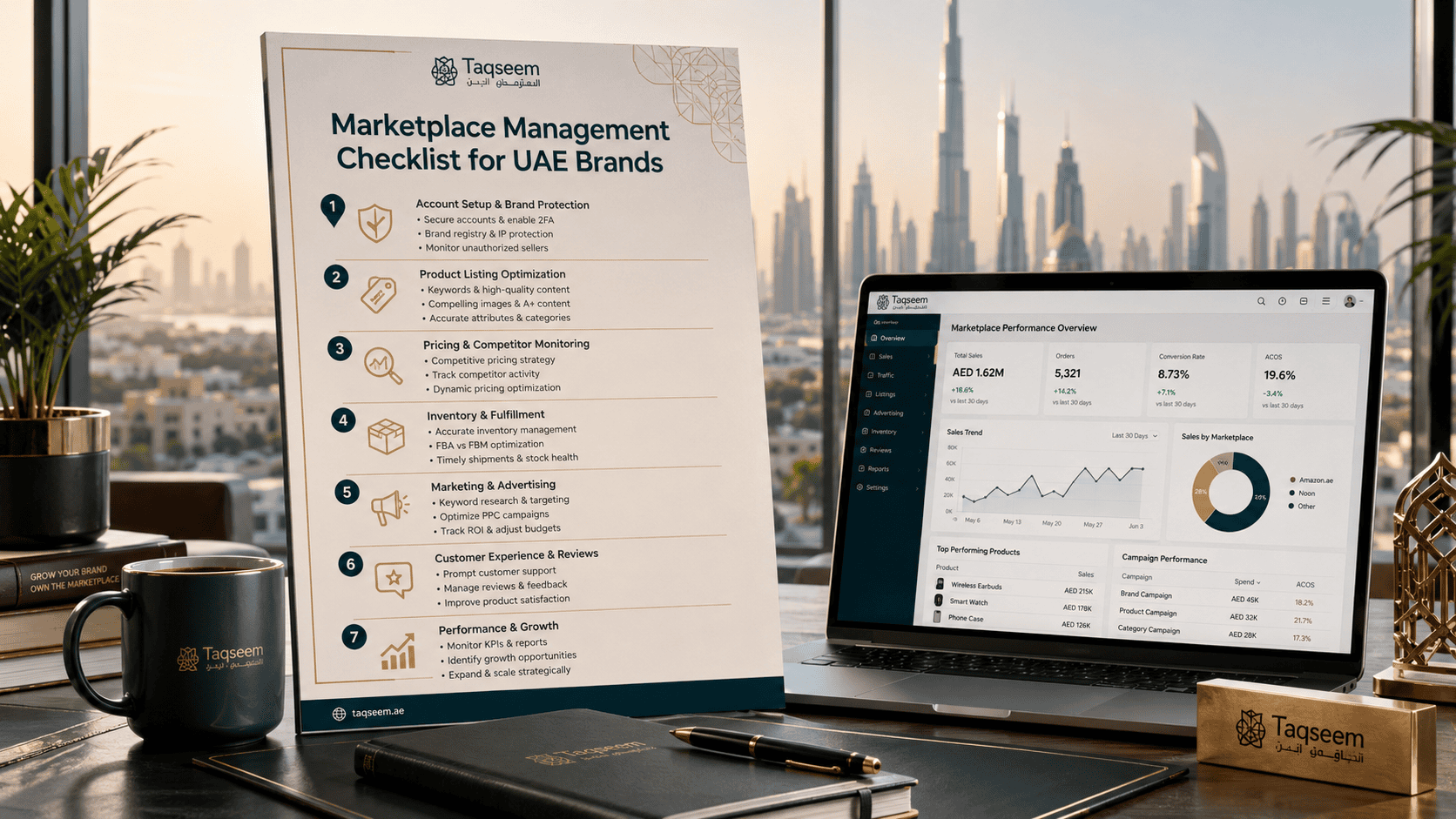
    Selling on marketplaces such as Amazon UAE and Noon UAE can unlock demand, trust, and visibility. But marketplace growth does not come from uploading products once and waiting for orders. It requires weekly management across account health, catalogue quality, pricing, inventory, advertising, reviews, promotions, and reporting. 

    Use this checklist to audit and improve marketplace performance for UAE brands. 

    1. Account setup and brand protection checklist 

    Confirm business documents, VAT information where applicable, bank details, return address, fulfilment settings, seller profile, brand ownership, authorized users, and notification settings. Make sure the account is not dependent on one person’s login or undocumented process. 

    If the brand is eligible for brand protection or enhanced content options, complete the required steps early. This helps protect listings and improve presentation. 

    2. Catalogue and listing checklist 

    Review each SKU for title quality, category accuracy, attributes, variation structure, product description, bullet points, images, search terms, size/weight, warranty, model number, and compliance information. Many marketplace problems begin with poor catalogue structure. 

    Use consistent naming. Avoid duplicate listings, wrong variations, missing attributes, and keyword stuffing. Each listing should be easy for a customer and marketplace algorithm to understand. 

    Listing quality questions 

    Does the title include the main product type, brand, variant, size, and key feature? 

    Do the first three images explain the product without reading the description? 

    Are the bullet points benefit-led and specific? 

    Are variations grouped correctly? 

    Does the content answer common objections? 

    3. Image and content checklist 

    Marketplace images should include white background product images, lifestyle images, scale reference, usage demonstration, benefits, packaging, and comparison where allowed. Weak images reduce click-through rate and conversion. 

    Content should be written for the buyer, not only the marketplace form. Explain benefits, materials, usage, compatibility, care instructions, what is included, and why the product is different. 

    4. Pricing and margin checklist 

    Compare marketplace price against your website, retail partners, and competitors. Calculate marketplace fees, fulfilment cost, returns, promotion cost, advertising cost, VAT impact, and required margin before joining deals or lowering prices. 

    Do not chase ranking with unprofitable pricing unless there is a clear strategic reason and a time limit. 

    5. Inventory and fulfilment checklist 

    Monitor sales velocity, available stock, inbound stock, fulfilment status, stockout risk, slow-moving SKUs, damaged units, and lead times. Stockouts can damage ranking and waste advertising momentum. Overstocking can trap cash. 

    Prepare stock before campaign periods and seasonal peaks. Align marketplace ads with stock availability. 

    6. Advertising checklist 

    Set campaign structure by product group, match type, objective, and budget. Review search terms weekly. Move converting terms into exact match campaigns. Reduce wasted spend on irrelevant queries. Track ad sales, total sales, organic ranking movement, and profitability together. 

    Ads should not be used to force sales on weak listings. Fix content, reviews, pricing, and stock before scaling advertising. 

    7. Reviews and customer experience checklist 

    Monitor ratings, reviews, customer questions, returns, and complaints. Reviews are not only social proof; they are product research. Use negative reviews to improve content, packaging, instructions, product quality, and customer support. 

    Never use fake reviews or unsafe review practices. Focus on better customer experience and compliant review generation. 

    8. Weekly marketplace reporting checklist 

    A weekly report should include revenue, units sold, conversion rate where available, sessions, ad spend, ACOS/ROAS, top SKUs, low-stock SKUs, lost buy box or visibility issues, return reasons, review changes, and action plan for the next week. 

    Good reporting turns marketplace management from reactive firefighting into structured growth. 

    Final takeaway 

    Marketplace management is a weekly operating discipline. UAE brands that manage account health, catalogue quality, content, pricing, stock, ads, reviews, and reporting consistently will outperform brands that treat marketplaces as simple upload platforms. 

    FAQs 

    How often should marketplace listings be optimized? 

    Core listing quality should be reviewed before launch, then performance should be checked weekly. Titles, images, pricing, stock, ads, and reviews should be improved based on data. 

    What is the biggest marketplace mistake? 

    The biggest mistake is treating listings as data entry rather than sales pages. Weak content, poor images, wrong pricing, and stockouts reduce performance. 

    Can Taqseem manage Amazon and Noon accounts? 

    Yes. Taqseem can support marketplace setup, catalogue optimization, content, ads, reporting, and growth operations. 

  • Retail Store + Ecommerce: The Hybrid Growth Model for GCC Brands

    Retail Store + Ecommerce: The Hybrid Growth Model for GCC Brands

    The strongest GCC brands are no longer thinking in separate channels. Customers discover a product on social media, compare it on Google, check Amazon or Noon reviews, visit a store, ask on WhatsApp, and then buy wherever the experience feels easiest. This is why retail store plus ecommerce is becoming a hybrid growth model, not a side project. 

    For GCC brands, the goal is to make every channel support the others: physical retail creates trust and experience, ecommerce gives convenience and data, marketplaces create discovery, and CRM turns first-time buyers into repeat customers. 

    Why hybrid retail matters in the GCC 

    GCC shoppers are digitally active but still value physical experience, especially for categories like beauty, fashion, fragrances, toys, electronics, luxury, gifting, and food products. A physical store gives touch, trial, consultation, and instant trust. Ecommerce gives convenience, assortment, retargeting, and repeat purchase. 

    The opportunity is not to choose one. The opportunity is to design the journey so online and offline channels increase each other’s performance. 

    The five parts of a hybrid growth model 

    A hybrid model has five connected parts: retail store, ecommerce website, marketplaces, CRM, and reporting. Each part should have a clear role. The retail store should create experience and trust. The website should communicate brand value and collect customer data. Marketplaces should capture demand. CRM should drive retention. Reporting should show where growth is actually coming from. 

    1. Retail store as experience and proof 

    The store should not only sell products. It should capture customer data, encourage product education, collect reviews, push QR codes to product pages, and support social content creation. Staff should be trained to explain the online journey, marketplace availability, delivery options, and loyalty program. 

    2. Ecommerce website as brand headquarters 

    The website should tell the full brand story, show the complete range, answer product questions, host educational content, collect first-party data, and convert repeat buyers. It should also support SEO content so the brand is not fully dependent on ads or marketplaces. 

    3. Marketplaces as demand capture 

    Amazon, Noon, and category marketplaces should be used strategically. They can capture demand from customers who already trust the platform. The brand must manage pricing, stock, content, and reviews carefully so marketplaces support the brand rather than weaken it. 

    4. CRM as the retention engine 

    Retail and ecommerce data should feed CRM. Customers should receive useful messages after purchase: usage tips, refill reminders, bundle recommendations, loyalty offers, and review requests. CRM turns channel traffic into owned customer relationships. 

    5. Reporting as the decision layer 

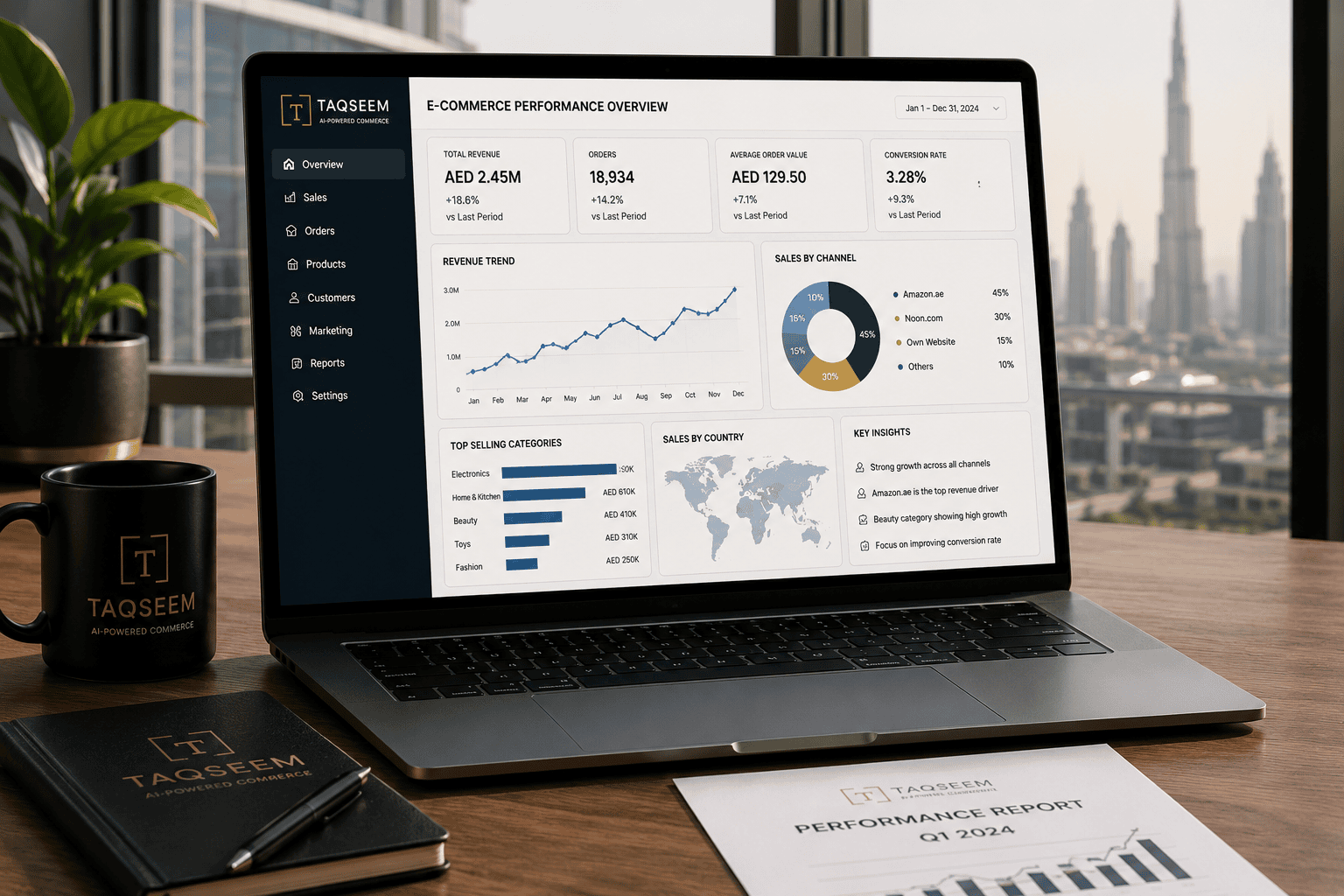
    Hybrid growth becomes confusing if reporting is weak. A good dashboard should show sales by channel, customer acquisition cost, repeat rate, store-to-online behavior, product performance, stock levels, campaign results, and customer feedback. 

    How to connect retail and ecommerce practically 

    Add QR codes in-store that link to product education pages, reviews, and bundles. Train retail staff to capture opt-ins ethically. Use store receipts to promote online reorder. Use online orders to invite customers to store activations. Use marketplace reviews to improve in-store merchandising. Use social content filmed in-store to improve ads and product pages. 

    Common hybrid retail mistakes 

    The first mistake is channel conflict: different prices, inconsistent promotions, or stock availability confusion. The second mistake is separate teams with separate KPIs. The third mistake is not capturing customer data in-store. The fourth mistake is treating ecommerce as only a catalogue instead of a conversion and retention system. 

    Final takeaway 

    The hybrid retail and ecommerce model helps GCC brands build trust, convenience, data, and repeat purchase at the same time. The brands that win will not be “online” or “offline.” They will be connected. 

    FAQs 

    What is hybrid retail? 

    Hybrid retail combines physical retail, ecommerce, marketplaces, CRM, and digital marketing into one connected customer journey. 

    Why is hybrid retail important in the GCC? 

    GCC customers often use both digital and physical touchpoints before buying. Hybrid retail helps brands build trust, convenience, and repeat purchase. 

    Can Taqseem build a hybrid growth model? 

    Yes. Taqseem can connect retail operations, ecommerce, marketplaces, CRM, marketing, and reporting into one growth system. 

  • UAE Ecommerce Growth Strategy for New Brands 

    UAE Ecommerce Growth Strategy for New Brands 

    UAE Ecommerce Growth Strategy for New Brands 

    Launching an ecommerce brand is only the first stage. Growth starts when the brand can attract the right traffic, convert visitors, deliver reliably, collect reviews, retain customers, and improve decisions using data. In the UAE, new brands must compete against global marketplaces, strong local retailers, social sellers, and fast-changing customer expectations. 

    This guide gives a practical growth strategy for new ecommerce brands in the UAE. 

    Phase 1: Fix positioning before increasing traffic 

    A new brand should first clarify its offer. What does the product do? Who is it for? Why should a UAE customer choose it instead of Amazon, Noon, a mall retailer, or an international brand? Without a clear answer, paid traffic becomes expensive because customers do not understand the reason to buy. 

    Positioning should appear on the homepage, product page, ads, marketplace listing, packaging, and social content. If each channel says something different, the brand becomes forgettable. 

    Phase 2: Build product pages that answer buyer questions 

    Product pages should not only list features. They should answer the buyer’s concerns: usage, size, ingredients or materials, benefits, comparison, delivery, returns, warranty, reviews, and who the product is best for. Add clear photos, lifestyle visuals, short videos, FAQs, and trust blocks. 

    A product page must be mobile-first. UAE customers are highly mobile-connected, so slow pages, confusing layouts, hidden delivery information, and weak checkout flows can damage conversion. 

    Phase 3: Use marketplaces for demand and proof 

    Marketplaces can provide discovery, trust, reviews, and search visibility. For new brands, Amazon and Noon can act as validation channels while the website builds brand identity and customer data. The mistake is treating marketplace sales as separate from brand strategy. 

    Use marketplace insights to improve website pages: keywords, questions, review themes, price sensitivity, bundles, and competitor gaps. 

    Phase 4: Build a traffic mix, not one-channel dependency 

    A strong traffic mix can include SEO, Google Search, Google Shopping where relevant, Meta ads, TikTok content, influencer/UGC, marketplace ads, email, WhatsApp, affiliate partners, and offline activations. New brands should test channels in controlled budgets before scaling. 

    Do not judge a channel only on first purchase ROAS. Some channels build awareness and assist conversion later. Still, every channel should have a clear role and measurement plan. 

    Phase 5: Improve conversion before scaling ad spend 

    If conversion rate is weak, more traffic will only increase waste. Improve hero messaging, page speed, product images, trust badges, reviews, shipping promise, payment options, checkout friction, bundles, and retargeting. Compare conversion by device, source, product, and landing page. 

    The growth question is not “How can we spend more?” It is “Where is the buyer journey leaking?” 

    Phase 6: Add retention from the first month 

    Many new brands focus only on acquisition. Retention is where margins improve. Add email, WhatsApp, SMS, reorder reminders, product education, loyalty, bundles, subscription where relevant, and post-purchase review requests. Retention should start immediately after the first order. 

    Segment customers by product purchased, order value, repeat potential, and engagement. Send useful content, not only discounts. 

    Phase 7: Use weekly growth reporting 

    Weekly reporting should cover revenue, gross margin, traffic, conversion rate, CAC, ROAS, AOV, top products, stock status, return rate, marketplace ranking, creative performance, and customer feedback. A report should end with decisions, not just numbers. 

    The best growth teams use reports to decide what to stop, what to fix, what to test, and what to scale. 

    90-day growth roadmap 

    Days 1-30: Fix positioning, product pages, analytics, marketplace content, and core campaigns. 

    Days 31-60: Test creatives, landing pages, bundles, marketplace ads, retargeting, and CRM flows. 

    Days 61-90: Scale winners, improve stock planning, expand product range carefully, add influencer/UGC proof, and build SEO content around high-intent topics. 

    Final takeaway 

    A UAE ecommerce growth strategy should connect brand clarity, conversion, marketplace visibility, paid media, retention, and reporting. Growth is not one campaign. It is a system that gets sharper every week. 

    FAQs 

    What is the best ecommerce growth channel in the UAE? 

    There is no single best channel. The best channel depends on product category, margin, audience, and brand maturity. Many brands need a mix of marketplace, website, paid media, SEO, content, and CRM. 

    When should a new brand start SEO? 

    SEO should start before or immediately after launch. New brands should create service, category, and blog content that answers real buyer questions and supports long-term organic discovery. 

    Can Taqseem manage ecommerce growth? 

    Yes. Taqseem can support ecommerce strategy, marketplace growth, paid media, conversion optimization, content, reporting, and AI automation. 

  • How AI Automation Reduces Ecommerce Operating Costs 

    How AI Automation Reduces Ecommerce Operating Costs 

    How AI Automation Reduces Ecommerce Operating Costs 

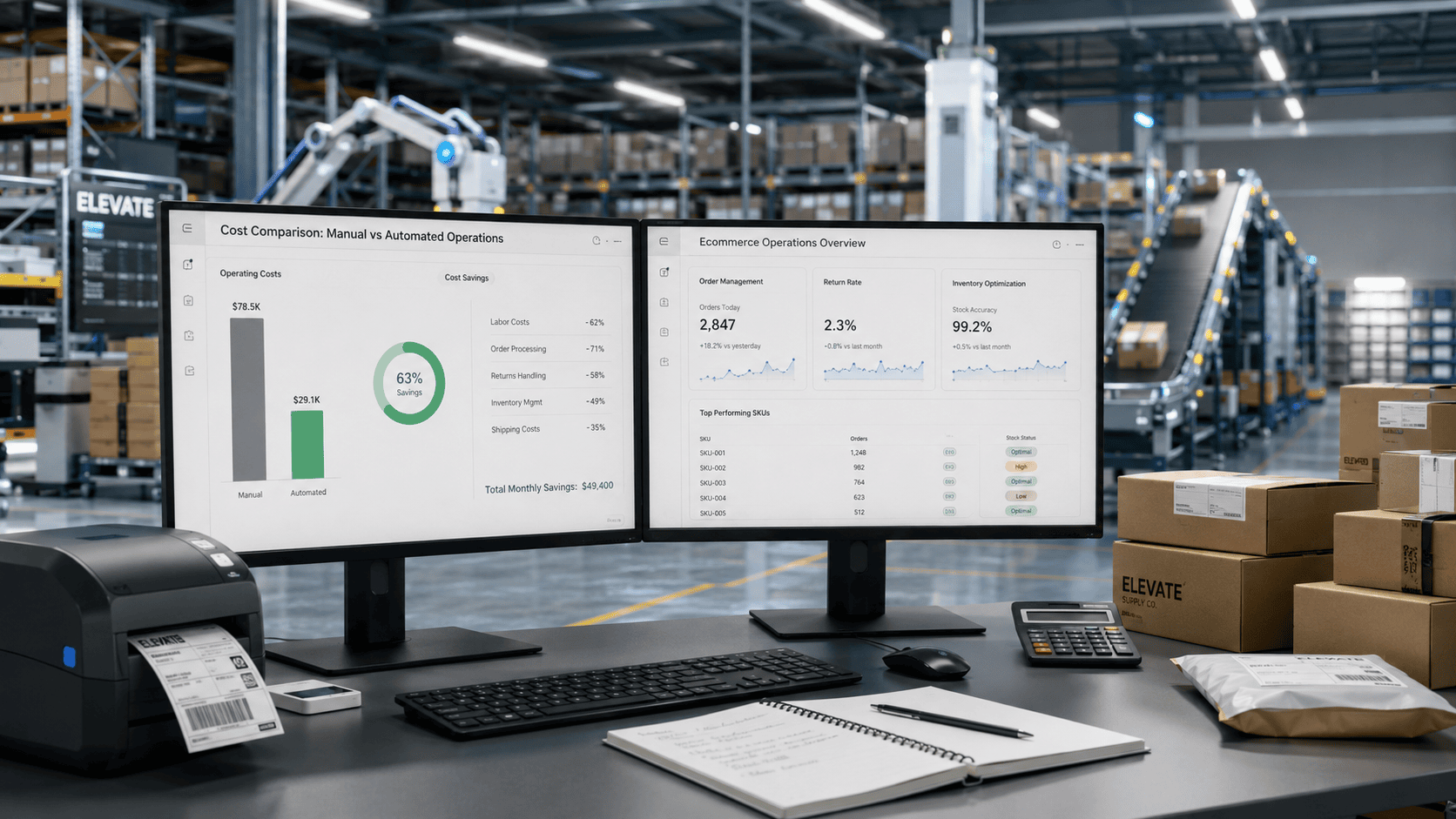
    Ecommerce teams often lose money through invisible operational waste: manual reports, repeated customer service questions, delayed stock decisions, slow listing updates, inconsistent campaign tracking, and too many tasks moving between people without clear ownership. AI automation reduces cost by removing repetitive work, improving decision speed, and connecting systems that were previously managed manually. 

    The goal is not to replace the entire team. The goal is to help the team focus on decisions, strategy, supplier relationships, creative direction, and customer experience while AI handles repetitive workflows. 

    Where ecommerce operating costs usually increase 

    Operating costs rise when the business scales faster than its systems. A brand may start with one website and a few SKUs, then add Amazon, Noon, social commerce, paid ads, influencers, WhatsApp enquiries, delivery partners, and customer service channels. Without automation, every new channel adds more manual work. 

    Common cost leaks include repeated product content creation, manual marketplace uploads, stockouts, overstocking, customer service delays, poor attribution, slow reporting, and campaigns that continue spending after performance has dropped. 

    AI automation area 1: Customer service and WhatsApp support 

    AI can answer common questions about product usage, delivery, returns, order status, size guide, warranty, store location, and availability. This reduces repetitive support load and improves response speed. Human agents should still handle complaints, high-value customers, sensitive issues, and complex cases. 

    The strongest model is a hybrid support flow: AI handles first response and information retrieval, then escalates to a human when needed. This improves customer experience without creating robotic service. 

    AI automation area 2: Product content and catalogue operations 

    Product listing work is repetitive and detail-heavy. AI can help generate product titles, bullet points, descriptions, FAQs, image briefs, comparison tables, and marketplace-specific content variations. It can also identify missing attributes, inconsistent naming, weak descriptions, and duplicate SKUs. 

    The human role remains important: review accuracy, brand voice, compliance, pricing, claims, and category-specific restrictions. AI should accelerate the workflow, not publish unchecked content. 

    AI automation area 3: Reporting and performance summaries 

    Many ecommerce teams spend hours collecting data from Shopify, WooCommerce, Amazon, Noon, Meta, Google Ads, TikTok, GA4, and spreadsheets. AI agents can summarize daily performance, highlight anomalies, explain what changed, and suggest actions. 

    A useful AI report does not only say revenue increased or decreased. It explains the likely reason: traffic source, conversion rate, average order value, stock status, campaign change, creative fatigue, pricing issue, or marketplace ranking movement. 

    AI automation area 4: Inventory and demand signals 

    Inventory decisions affect both revenue and cash flow. AI can monitor stock movement, sales velocity, campaign calendar, marketplace ranking, seasonality, and supplier lead time to flag stockout risk or overstock risk. This helps teams buy smarter and avoid emergency decisions. 

    AI should be connected to a clear rulebook: reorder thresholds, safety stock, minimum margin, promotional calendar, supplier lead times, and slow-moving SKU rules. 

    AI automation area 5: Marketing workflow and creative testing 

    AI can help plan campaign angles, generate ad copy variations, summarize performance, detect creative fatigue, build UGC briefs, and organize content calendars. It can also help connect ad performance to product page performance so the team can see whether the issue is traffic quality, offer, landing page, or pricing. 

    For paid media, automation should support measurement quality. Accurate conversion tracking and first-party data are increasingly important for campaign optimization. 

    How to start AI automation without overcomplicating the business 

    Start with one painful workflow rather than trying to automate everything. Choose a workflow that is frequent, measurable, repetitive, and low-risk. Examples include daily sales reporting, customer FAQ responses, abandoned cart follow-up, marketplace content generation, or inventory alerts. 

    Document the current process, define the desired output, connect the necessary data sources, build the automation, test it manually, then gradually move it into production. 

    A practical AI automation rollout plan 

    Week 1: Map repetitive workflows and calculate time spent. 

    Week 2: Choose one workflow with clear ROI. 

    Week 3: Build a simple automation using existing tools and data. 

    Week 4: Test accuracy, escalation rules, and human review. 

    Week 5 onward: Expand to reporting, customer service, catalogue, inventory, and marketing workflows. 

    Final takeaway 

    AI automation reduces ecommerce operating costs when it is connected to real business workflows. The best use cases are not flashy. They are the daily processes that slow the team down: reports, support, catalogue, inventory alerts, campaign summaries, and CRM follow-ups. Start small, measure impact, then scale automation across the operation. 

    FAQs 

    Can AI automation replace ecommerce staff? 

    AI should not be treated as a complete replacement for ecommerce staff. It is most useful for repetitive workflows, reporting, content assistance, customer support triage, and decision support. 

    What is the best first AI automation for ecommerce? 

    Daily performance reporting, customer FAQs, abandoned cart follow-up, and catalogue content workflows are usually strong starting points because they are repetitive and measurable. 

    Can Taqseem build AI agents for ecommerce operations? 

    Yes. Taqseem can design AI agents and workflow automations for reporting, customer service, content, CRM, inventory, and marketplace operations. 

  • Cost of Launching a Retail Brand in Dubai

    Cost of Launching a Retail Brand in Dubai

    The cost of launching a retail brand in Dubai depends on the product category, business model, sales channels, licensing route, sourcing model, store format, ecommerce setup, marketing budget, and working capital requirement. The biggest mistake founders make is budgeting only for license, rent, and product stock while ignoring brand identity, packaging, photography, marketplace setup, fulfilment, advertising, and cash flow. 

    This guide explains the main cost heads so founders can plan realistically before launching. 

    The real cost is not one number; it is a launch system 

    A retail brand can be launched in several ways: ecommerce-first, marketplace-first, kiosk, shop-in-shop, pop-up, wholesale distribution, full retail store, or hybrid retail plus ecommerce. Each model has a different cost structure. A lean ecommerce-first model may require lower fixed costs, while a physical retail store can require higher upfront investment and monthly overheads. 

    The goal is not to spend the least. The goal is to spend in the right sequence so every dirham supports commercial validation, customer trust, and repeatable growth. 

    Cost head 1: Market research and commercial validation 

    Before spending on stock, validate demand. Research should include competitor price mapping, customer segments, marketplace search data, category trends, product gaps, packaging benchmarks, retail shelf analysis, and margin simulations. This reduces the risk of launching products that look attractive but cannot compete commercially. 

    Market research is especially important in Dubai because the market is diverse. A product may appeal to one nationality, income bracket, lifestyle segment, or channel but fail in another. 

    Cost head 2: Business setup, licensing and compliance 

    Your business setup cost depends on jurisdiction, activity, visa needs, office requirements, category approvals, import rules, and whether you sell online, offline, wholesale, or through marketplaces. Some product categories require labelling, product registration, certificates, or additional approvals. 

    Do not choose the cheapest license without checking whether it supports your actual business activity and future sales channels. A wrong setup can create delays when onboarding marketplaces, payment gateways, logistics partners, or retail partners. 

    Cost head 3: Brand identity, packaging and content 

    Branding is not only a logo. Budget for name strategy, positioning, visual identity, packaging design, brand guidelines, product photography, lifestyle photography, short videos, ecommerce banners, marketplace content, and social media templates. In UAE retail and ecommerce, strong visuals directly affect trust and conversion. 

    Packaging should also be costed carefully. Premium packaging improves perceived value but can damage margins if material, MOQ, printing, shipping volume, and storage are not calculated. 

    Cost head 4: Product development, sourcing and inventory 

    Inventory is usually one of the largest cost areas. Include sample costs, supplier audits, moulds if needed, MOQ, production, quality inspection, freight, customs, storage, damages, and stock buffer. For a new brand, do not over-order only to reduce unit cost. Dead inventory is more expensive than a slightly higher first production run. 

    A healthy launch range should balance hero SKUs, supporting SKUs, bundles, and future expansion. The range should be large enough to look credible but small enough to learn quickly. 

    Cost head 5: Ecommerce website and marketplace setup 

    A retail brand now needs a digital shelf even if the main sales channel is offline. Budget for a conversion-ready website, product pages, payment gateway, delivery integration, analytics, email/WhatsApp automation, marketplace listings, catalogue setup, and product feed structure. 

    A cheap website that cannot convert, track, or scale is expensive in the long run. Build for speed, trust, mobile experience, checkout clarity, and SEO from day one. 

    Cost head 6: Retail location, fixture and operations 

    If launching offline, include rent, deposit, fit-out, signage, POS system, staff, uniforms, inventory display, merchandising, utilities, insurance, mall requirements, opening stock, and opening campaign. A retail location should be selected based on customer segment and economics, not only footfall. 

    For many brands, a pop-up, kiosk, consignment model, or shop-in-shop partnership can be a smarter first step than committing to a full store immediately. 

    Cost head 7: Marketing and launch budget 

    Marketing cost should include paid ads, influencer/creator content, launch event or activation, PR outreach, sampling, email/SMS/WhatsApp flows, content production, marketplace ads, retargeting, and creative testing. New brands often underestimate how many creatives are required to find winning messages. 

    Do not spend the full marketing budget in the first week. Launch in waves: awareness, traffic, conversion, retargeting, review building, bundle testing, and retention. 

    Cost head 8: Working capital and cash-flow buffer 

    Retail brands fail when they run out of cash between inventory purchases, payment settlements, returns, rent, salaries, and marketing spend. Keep a working-capital buffer for at least three to six months depending on the model. Marketplace payouts, supplier payments, and ad spend timing must be planned together. 

    Cash flow should be reviewed weekly during the launch phase. 

    Final takeaway 

    The cost of launching a retail brand in Dubai is not only about the company license or store rent. A successful launch requires a planned budget for research, brand identity, product, packaging, ecommerce, marketplace setup, operations, marketing, and working capital. The safest approach is to build a phased launch budget before committing to inventory or rent. 

    FAQs 

    What is the minimum budget to launch a retail brand in Dubai? 

    There is no single minimum because the model changes the cost. Ecommerce-first, marketplace-first, pop-up, kiosk, and full retail store launches all have different budgets. 

    Should I open a physical store first or launch online first? 

    Many brands should validate online first, then use physical retail when demand, margin, and assortment are clearer. However, some categories benefit from physical experience and sampling. 

    Can Taqseem prepare a launch budget? 

    Yes. Taqseem can prepare a budget model covering product, sourcing, branding, ecommerce, marketplaces, marketing, retail operations, and working capital. 

  • Amazon UAE vs Noon UAE: Which Marketplace Should Brands Choose? 

    Amazon UAE vs Noon UAE: Which Marketplace Should Brands Choose? 

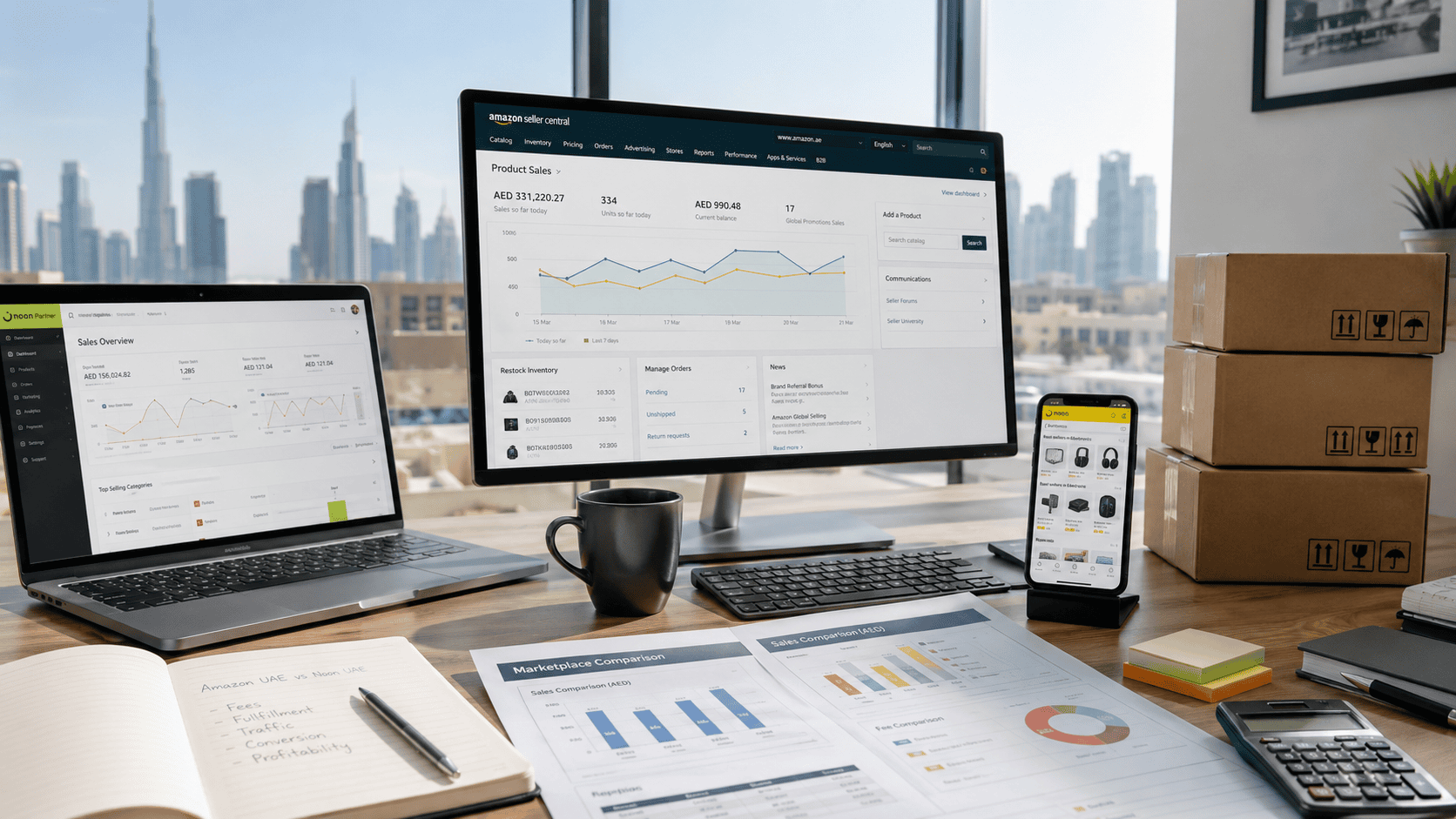
    Amazon UAE and Noon UAE are both important ecommerce channels, but they are not the same strategy. Many brands make the mistake of asking, “Which one is better?” The better question is: “Which marketplace fits my category, pricing, fulfilment capacity, content quality, advertising budget, and growth stage?” 

    For most serious brands, the answer is not either/or. The right marketplace strategy is often a phased model: choose the strongest launch channel first, then expand to the second once listings, stock planning, reviews, pricing, and advertising are stable. 

    Quick answer: choose based on business objective 

    Choose Amazon UAE if your priority is buyer trust, search-led product discovery, structured catalogue ranking, and long-term marketplace authority. Choose Noon UAE if your category has strong local marketplace demand, competitive pricing, regional promotions, and an audience that responds well to deals and fast-moving ecommerce campaigns. 

    Choose both if your brand has enough operational capacity to manage catalogue quality, pricing parity, fulfilment, promotions, stock allocation, and customer service without damaging margins. 

    Amazon UAE: strengths and best-fit categories 

    Amazon UAE is strong for search-led buying journeys. Customers often arrive with specific intent: a product type, a brand name, a feature, or a price range. This makes Amazon powerful for brands that can build high-quality listings, collect reviews, maintain inventory, and run disciplined sponsored ads. 

    Amazon is usually a strong fit for electronics accessories, beauty, personal care, home, health products where allowed, baby products, household items, pet products, office items, and branded consumer goods. However, competition can be intense, and weak listings are quickly buried. 

    Amazon UAE success factors 

    Keyword-rich product titles without stuffing. 

    High-resolution product images and lifestyle images. 

    Clear bullet points focused on benefits and use cases. 

    Competitive pricing with margin protection. 

    Inventory availability, especially if using FBA or marketplace fulfilment models. 

    Sponsored Products campaign structure with search term optimization. 

    Noon UAE: strengths and best-fit categories 

    Noon is a major regional marketplace with strong brand recognition across the GCC. It can be especially useful for categories where promotions, local shopping behavior, pricing competitiveness, and fast-moving assortment matter. For many brands, Noon can work well as a regional sales and visibility channel. 

    Noon can be a good fit for fashion, beauty, electronics accessories, home, grocery-adjacent products, toys, lifestyle products, and value-driven consumer categories. The key is to understand marketplace pricing pressure and promotional expectations before listing. 

    Noon UAE success factors 

    Clean SKU setup and accurate catalogue data. 

    Competitive selling price and promotion planning. 

    Strong image presentation and product descriptions. 

    Stock availability aligned with campaign periods. 

    Clear seller operations, fulfilment, and return handling. 

    Comparison table: Amazon UAE vs Noon UAE 

    Amazon UAE is usually stronger for structured search behavior and long-term review-led authority. Noon UAE is usually stronger for regional marketplace visibility, promotion-led selling, and categories where local shoppers actively compare deals. The better channel depends on the product economics. 

    How to compare the two platforms before choosing 

    Search your top 20 target keywords on both platforms and record the first-page competitors. 

    Check average review count and star rating of top sellers. 

    Compare the visible price range with your landed cost and required margin. 

    Review image quality, content depth, bundle offers, and sponsored placement density. 

    Estimate how much stock you can allocate without creating dead inventory. 

    Decide whether the channel is for profit, discovery, ranking, or defensive brand presence. 

    Marketplace launch strategy for new brands 

    Do not upload your entire catalogue at once. Start with the SKUs that have the highest chance of ranking and converting: simple use case, strong visual appeal, competitive price, reliable stock, manageable return risk, and clear differentiation. 

    Launch with 5 to 20 SKUs depending on the category. Build reviews, improve content, monitor search terms, and fix operational issues before scaling the full range. 

    Common mistakes brands make on Amazon and Noon 

    The most common mistake is treating marketplace listing as data entry. A product page is a sales page. Poor titles, weak images, missing attributes, unclear variations, low stock, and inconsistent pricing can damage ranking and conversion. Another mistake is running ads before the listing is conversion-ready. 

    Brands also fail when they do not control channel conflict. If the same product is sold at different prices across website, Amazon, Noon, and retail partners, customers lose trust and margins become difficult to protect. 

    Final recommendation 

    A serious UAE brand should not choose a marketplace emotionally. Choose based on category data, competition, fulfilment capacity, advertising budget, and margin structure. Amazon UAE, Noon UAE, and your own DTC website should work as part of one growth system, not as disconnected channels. 

    FAQs 

    Is Amazon UAE better than Noon UAE? 

    Neither is automatically better. Amazon UAE may be stronger for search-led discovery and review authority, while Noon UAE may be strong for regional visibility, promotions, and price-led categories. The right choice depends on the product and business model. 

    Should a new brand sell on both Amazon and Noon? 

    Only if the brand can manage pricing, stock, content, fulfilment, and customer service properly. Starting with one channel and expanding after operational stability is often safer. 

    What does Taqseem do for marketplace brands? 

    Taqseem can support account setup, catalogue optimization, content creation, ads strategy, inventory planning, reporting, and marketplace growth management. 

  • How to Launch an Ecommerce Brand in Dubai in 2026 

    How to Launch an Ecommerce Brand in Dubai in 2026 

    Dubai is one of the most attractive markets in the GCC for ecommerce brands, but it is also one of the easiest markets to enter badly. Many founders start with a website, a logo, and a few products, then discover later that the pricing, fulfilment, licensing, payment gateway, marketplace strategy, and customer acquisition model were not built together. 

    The UAE is a digital-first market with near-universal internet penetration, strong mobile usage, and customers who compare brands across marketplaces, social channels, Google Search, and physical retail before buying. For a new brand, this means the launch cannot be treated as only a website project or only a marketplace project. The winning approach is a connected commercial system: product-market fit, clear positioning, a trusted sales channel, fast fulfilment, measurable marketing, and repeat-purchase loops. 

    This guide explains how to launch an ecommerce brand in Dubai in a structured way, so the brand is ready for traffic, sales, fulfilment, reviews, and scale. 

    Step 1: Choose a niche with commercial demand, not only personal interest 

    Start with a niche where customers already search, compare, and buy. The best ecommerce niches usually combine visible demand, repeat purchase potential, manageable shipping, healthy margins, and clear differentiation. Avoid choosing products only because they are trending on social media. A trend can create attention, but a brand needs sustainable demand. 

    Build a simple validation sheet before investing: target customer, product problem, current alternatives, marketplace prices, Google Search intent, social content potential, gross margin, shipping complexity, and regulatory risk. 

    Practical niche validation checklist 

    Check Amazon.ae and Noon for current bestsellers and review gaps. 

    Search Google for buyer-intent keywords such as “best”, “price”, “near me”, “UAE”, and “Dubai”. 

    Review TikTok, Instagram, YouTube Shorts, and Reddit for customer language and objections. 

    Estimate landed cost, packaging cost, fulfilment cost, ads cost, returns, payment fees, and VAT impact before deciding the final retail price. 

    Step 2: Define the brand promise before designing the logo 

    A logo is not the brand. The brand is the reason a customer should choose you when cheaper, faster, and better-known alternatives are available. Before visual identity, define the positioning: who the product is for, what problem it solves, what outcome the customer gets, and why your offer is meaningfully different. 

    A good Dubai ecommerce brand should also consider the local audience mix. The UAE market includes Emiratis, Arab expats, South Asians, Filipinos, Europeans, Africans, and global tourists. The brand voice, product photography, payment options, and delivery promise should feel natural to the specific audience segment. 

    Step 3: Select the right business setup and compliance path 

    Choose the license and company structure based on your selling model. A DTC website, Amazon/Noon marketplace operation, wholesale distribution model, and retail shop all have different operational needs. Confirm whether the product category needs approvals, labelling, product registration, import documents, or category-specific compliance. 

    The UAE has modernized digital commerce regulation, and ecommerce brands should treat licensing, logistics, payments, consumer protection, and data privacy as part of the operating model, not as afterthoughts. 

    Step 4: Build your sales architecture: website, marketplace, social commerce, or all three 

    Most brands should not depend on a single channel. A website gives brand control, customer data, and long-term retention. Marketplaces such as Amazon and Noon give demand, trust, and discovery. Social commerce creates attention and education. The best mix depends on category, budget, urgency, and margin. 

    For many new brands, the strongest launch sequence is: start with marketplace research, build a conversion-ready DTC website, launch selected SKUs on Amazon/Noon, then use paid media and creator content to drive traffic into the most profitable channel. 

    Recommended launch stack 

    DTC website: brand story, product pages, bundles, reviews, FAQs, and retargeting pixel setup. 

    Marketplace: optimized listings, keyword-rich titles, images, A+ content or enhanced content where available, stock planning, and review generation. 

    Social: short-form demonstrations, founder content, customer use cases, and creator-led proof. 

    CRM: email, WhatsApp, SMS, abandoned cart, post-purchase education, and reorder reminders. 

    Step 5: Prepare products, pricing, packaging, and fulfilment before running ads 

    Paid traffic exposes weaknesses quickly. Before running campaigns, make sure your products have competitive pricing, clear product pages, good images, delivery promise, return policy, payment options, and tracking. A beautiful ad cannot fix a weak offer. 

    For Dubai and UAE customers, speed matters. Same-day or next-day delivery can improve conversion in many categories, but only if the margin supports it. If you cannot compete on speed, compete on trust, quality, bundles, brand story, or specialized assortment. 

    Step 6: Launch with measurement from day one 

    Install tracking before traffic starts. You should know where users came from, which pages they visited, what they added to cart, where they dropped off, and which campaigns produced profitable customers. Use Google Analytics, Search Console, Meta pixel, TikTok pixel, marketplace reports, heatmaps, and CRM reporting. 

    Define launch KPIs before launch: conversion rate, CAC, ROAS, gross margin, order fulfilment time, return rate, review score, repeat purchase rate, and organic search impressions. 

    Step 7: Scale only after the unit economics are clear 

    Do not scale only because ads are generating orders. Scale when gross margin, fulfilment cost, return rate, marketing efficiency, and customer satisfaction are stable enough to handle more demand. A brand that scales with weak unit economics often grows revenue and loses cash at the same time. 

    The right growth model is phased: validate the offer, optimize the website, improve marketplace ranking, launch retargeting, build content assets, introduce bundles, add CRM automations, then expand categories or markets. 

    Final takeaway 

    Launching an ecommerce brand in Dubai is not a one-time website project. It is a commercial system that connects product strategy, licensing, branding, website, marketplaces, fulfilment, marketing, analytics, and AI-powered operations. Brands that build this system from the beginning have a much better chance of scaling profitably in the UAE and GCC. 

    FAQs 

    H3: How much does it cost to launch an ecommerce brand in Dubai? 

    The cost depends on license, product category, sourcing, website, content, fulfilment, and marketing budget. A lean launch may start with a limited SKU range, while a serious brand launch should budget for compliance, branding, product photography, marketplace setup, and paid acquisition. 

    H3: Should I launch on my website or Amazon/Noon first? 

    For most brands, the strongest approach is to prepare both. Marketplaces give demand and trust, while your own website gives brand control and customer data. The best sequence depends on category and margin. 

    H3: Can Taqseem help launch the brand from zero? 

    Yes. Taqseem can support market research, niche validation, brand development, ecommerce setup, marketplace management, marketing, automation, and growth planning.

  • How Taqseem is Reshaping the UAE’s Digital Retail Landscape

    How Taqseem is Reshaping the UAE’s Digital Retail Landscape

    In the bustling heart of the United Arab Emirates, a digital revolution is underway. As traditional souks give way to sleek online marketplaces, businesses across the region are scrambling to establish their digital presence. Enter Taqseem, the UAE’s premier e-commerce marketing agency, poised to transform the online retail scene from Dubai to Abu Dhabi and beyond.

    The UAE’s E-commerce Boom: A Golden Opportunity

    The UAE’s e-commerce sector has experienced explosive growth recently, with online sales projected to surpass $9 billion by 2025. This surge is fueled by a tech-savvy population, high internet penetration rates, and a government committed to digital transformation. For businesses, this presents an unprecedented opportunity to tap into a market hungry for innovative online shopping experiences.

    However, navigating this complex digital landscape can be daunting. That’s where Taqseem comes in, offering a comprehensive suite of services designed to help businesses thrive in the competitive world of UAE e-commerce.

    Taqseem: Your One-Stop E-commerce Solution

    As an e-commerce marketing agency in Dubai, Taqseem stands out for its holistic approach to digital retail. From initial market research to ongoing optimization, they provide end-to-end support for businesses at every stage of their e-commerce journey.

    Offline Retail Expertise

    While focusing on digital, Taqseem recognizes the importance of a strong offline presence in the UAE market. Their services include:

    1. Legal and Licensing: Navigating the complexities of UAE business regulations to ensure full compliance.
    2. Market Research: Providing invaluable insights into the UAE’s diverse consumer base.
    3. Financial Feasibility: Offering detailed projections and risk assessments tailored to the local retail landscape.
    4. Location Selection: Finding prime physical locations optimized for foot traffic in key UAE shopping districts.
    5. Interior Design and Construction: Creating captivating in-store experiences aligned with brand identity.
    6. Operations Setup: Implementing efficient systems for smooth day-to-day operations.
    7. Retail Merchandising: Maximizing sales through strategic product placement and visual techniques.

    Online Retail Mastery

    At the heart of Taqseem’s offerings are their cutting-edge e-commerce services:

    1. Branding and Design: Crafting compelling brand identities that resonate with UAE consumers across all digital touchpoints.
    2. E-commerce Web and App Development: Building user-friendly, conversion-optimized online stores and mobile apps.
    3. Photography and Videography: Showcasing products with stunning visuals that capture attention.
    4. Social Media Content Creation: Engaging audiences with localized, culturally relevant content.
    5. Digital Marketing: Driving targeted traffic and boosting conversions through comprehensive strategies.
    6. Marketplace Listing and Store Creation: Establishing strong presences on popular UAE online marketplaces.
    7. Logistics and Supply Chain Management: Streamlining operations with efficient fulfillment and delivery solutions.

    The Taqseem Advantage: Why Choose Us?

    In a sea of digital agencies, Taqseem sets itself apart through:

    1. Unparalleled UAE Market Expertise: Years of experience in the local market, ensuring strategies resonate with UAE consumers and comply with regulations.
    2. Data-Driven Approach: Leveraging cutting-edge analytics and market research to inform every decision.
    3. Multilingual Excellence: Offering expert Arabic translation and localization services to reach a wider audience.
    4. Cutting-Edge Technology: Staying ahead with the latest e-commerce technologies and best practices.
    5. Proven Track Record: A growing list of satisfied clients who have achieved remarkable success in the UAE e-commerce landscape.
    6. Customized Solutions: Tailoring services to meet each business’s unique needs and goals.

    Expanding Your Reach Across the UAE

    Taqseem’s services extend throughout the UAE, including Dubai, Abu Dhabi, Sharjah, Ajman, Umm Al Quwain, Ras Al Khaimah, and Fujairah. They also specialize in helping businesses establish a presence in key free zones such as Dubai CommerCity, Dubai Internet City, and RAKEZ.

    Boosting Online Visibility with Expert SEO

    In the competitive UAE market, visibility is key. Taqseem’s SEO services in UAE are designed to help businesses climb search rankings and attract qualified traffic. Their team of experts employs cutting-edge techniques to optimize websites for both local and international search engines, ensuring maximum visibility for their clients.

    Maximizing Impact with Comprehensive E-commerce Management

    Running an online store in the UAE comes with unique challenges. Taqseem’s e-commerce management services provide businesses with the support they need to thrive. From inventory management to customer service optimization, their team ensures smooth operations and consistent growth.

    Conquering Amazon: Best-in-Class Account Management

    As the world’s largest e-commerce platform, Amazon presents unparalleled opportunities for UAE sellers. Taqseem’s Amazon account management services help businesses navigate this complex marketplace, optimizing listings, managing inventory, and boosting sales through data-driven strategies.

    Creating Compelling Product Listings

    In the digital realm, product listings are a business’s virtual storefront. Taqseem’s online product listing services ensure that each item is presented in its best light, with compelling descriptions and optimized keywords designed to drive conversions.

    Mastering Multiple Marketplaces

    Why limit yourself to a single platform? Taqseem’s e-commerce listing services help businesses expand their reach across multiple online marketplaces, ensuring maximum visibility and sales potential throughout the UAE.

    Crafting a Unique Brand Identity

    In a crowded digital landscape, standing out is crucial. As a leading brand agency in UAE, Taqseem helps businesses craft unique brand identities that resonate with local consumers. From logo design to brand voice development, they ensure each client’s brand tells a compelling story.

    Building Websites That Convert

    A business’s website is often the first point of contact with potential customers. Taqseem’s web design agency in Dubai creates visually stunning, user-friendly websites optimized for conversions. Their designs seamlessly blend aesthetics with functionality, ensuring a smooth user experience that drives results.

    Dominating Social Media

    In the UAE’s hyper-connected society, social media presence is non-negotiable. Taqseem’s social media agency in Dubai helps businesses create engaging content, build loyal communities, and leverage platforms like Instagram, Facebook, and Twitter to drive traffic and sales.

    The Future of E-commerce in the UAE

    As the UAE continues its journey towards becoming a global e-commerce hub, businesses that embrace digital transformation will be well-positioned for success. With Taqseem as a partner, companies can navigate this evolving landscape with confidence, leveraging cutting-edge strategies and local expertise to thrive in the digital age.

    From established retail giants looking to expand their online presence to ambitious startups seeking to disrupt the market, Taqseem offers the tools, knowledge, and support needed to succeed in the UAE’s dynamic e-commerce ecosystem.

    Bottom Line

    In conclusion, as the lines between online and offline retail continue to blur, businesses in the UAE need a partner who understands both worlds. Taqseem, with its comprehensive approach to e-commerce marketing and deep understanding of the local market, is uniquely positioned to guide businesses through this digital transformation. By combining innovative strategies, cutting-edge technology, and a deep commitment to client success, Taqseem is not just riding the e-commerce wave – they’re helping to shape the future of retail in the UAE.